We now look at your site before writing a word
· 3 min read
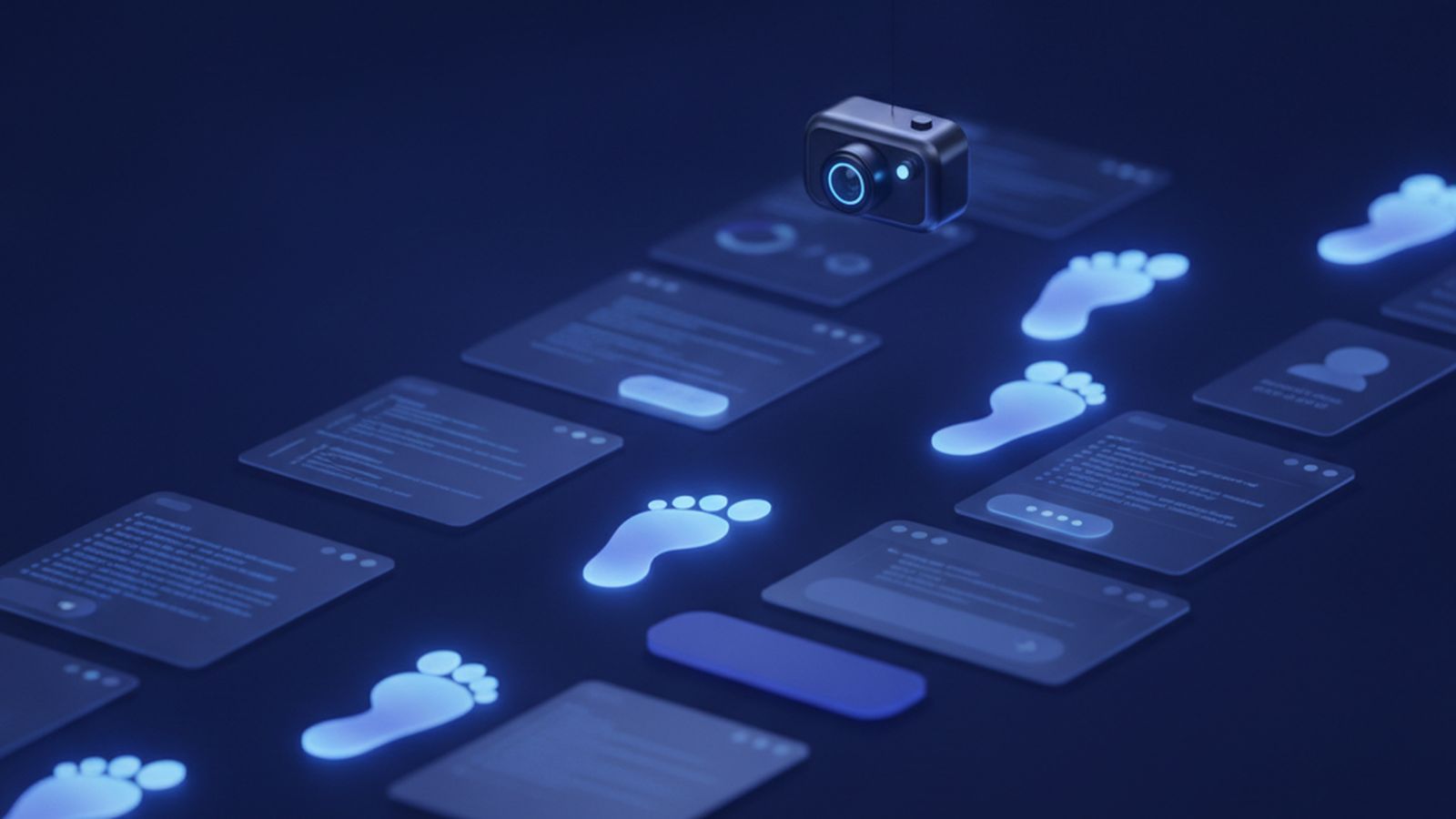
Imagine writing the voice-over for a product tour with your eyes closed, from a list of button names. That was our planner's job until today. Now, before a single word is written, PageToVid walks through your site, photographs it and presses its buttons to see what they do.
Writing about a screen it had never seen
The planner is the model that writes a film's lines and its shot list. It worked from text alone: the page's words and a list of the things that could be filmed. The only picture any model saw was the top of the page, and it went to the analyst, not to the writer.
So the planner planned clicks on buttons nobody had pressed and described what it imagined they would open. A line like “this opens your tailored booking options” could play over a still shot of the home page.
We already compared each line with its recording after filming, and rewrote the ones that did not match. But a repair after the fact is held to the length of a line written for something else. The fix had to come before the script.
The walk: photograph, press, look again
The walk is a new step in the probe, the part of PageToVid that reads a site before anything is planned. After its usual reading, it goes through the site like a careful first-time visitor:
- it photographs up to 12 subjects where they sit on the page, the ones named in your brief first, with the main page keeping at least half;
- it presses up to 6 of the pressable ones, once each, on a scratch copy of the page;
- after each press, it reads the address and the words again and takes a second photograph.
Every press gets a verdict: it opened a page, it changed the page with a dialog or a panel, it did nothing, it reached a sign-in door, or it left the site. A cookie banner that appears on the first interaction is not mistaken for what the button opened.
The buttons we never press
Pressing someone else's buttons calls for rules before features. The walk never presses:
- a sign-in, sign-up, buy, send or download control;
- a call or messaging button;
- anything that leaves the site;
- a file picker or a form field.
Those can still appear in a film, as a spotlight at most. The whole walk runs within 45 seconds. A site that will not play along gives fewer pictures, never a failed film. And one switch turns the walk off and restores the planner's previous instructions exactly, which is how we compare the two paths on the same site.
A script written to the pictures
The planner now receives every photograph, each with its caption, the after-picture of every press that opened something, and one rule: a line says what its shot shows. A click is planned only on a press the walk saw open something, and the line describes the after-picture.
Then the plan is held to it in code. A click on a button that did nothing, a door or a control the walk refused becomes a spotlight, and the scene after a click that opened a page continues on that page, as a tour.
One more step makes sure good tours are not left on the table. When a scene names a button by at least two words of its label, and the walk saw that button open something, the scene becomes that click, up to two per film. A second button with the same label on the same page shares the first one's verdict.
What changed on real sites
We measured three sites before shipping. A bike shop's vertical tutorial gained two real tours: from the home page into spare parts, and into service booking. A software dashboard demo clicked three panels, each one seen to open, and toured into them. Our own landing page typed a web address, clicked “See all examples” and ended on a spotlight of the submit button it must not press.
The bench also sharpened how we list a page's subjects: a button whose text begins with an icon is now read by its words, so it can be filmed like any other. Next on our list are single-page apps whose tabs arrive as one navigation block, so the walk can open those too.
Every new film made at /new now starts with the walk. Look first, then write.
See it on your own site
Paste a page and get the narrated film this blog is about. The first one is free.
Keep reading